

How Carotid Ultrasound Detects Blockages Before a Stroke
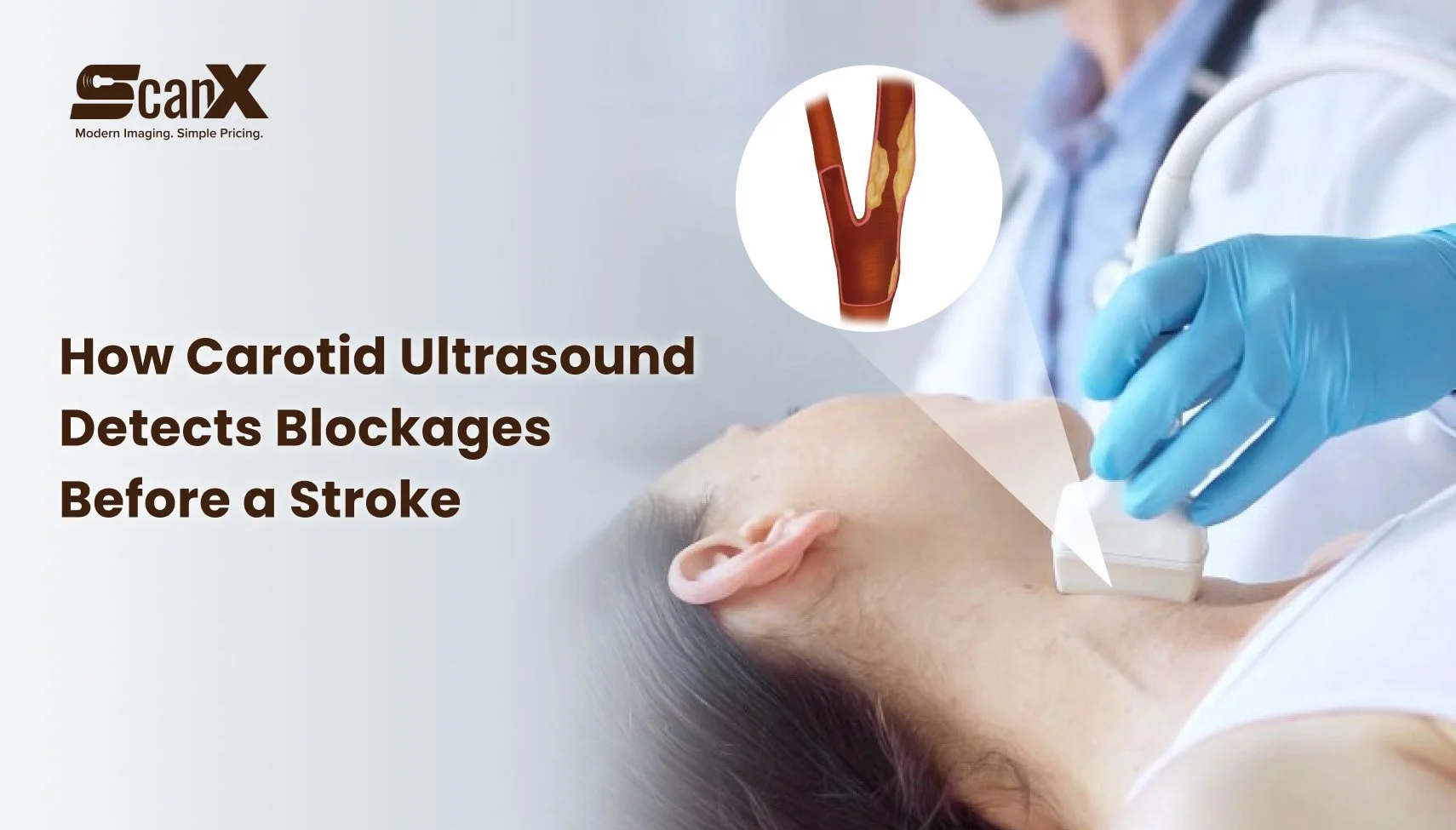
The Carotid Doppler ultrasound is a safe, non-surgical imaging procedure assessing blood flow in the carotid arteries, the primary vessels supplying oxygenated blood to the brain.
This examination is crucial for identifying blocked or narrowed arteries, which increases the risk of stroke and other cardiovascular problems.
With early detection through a Carotid Doppler ultrasound, doctors can take timely action to reduce the risk of serious conditions like transient ischemic attacks (TIAs), strokes, and blood clots.
Check out ScanX’s Patient Referralsto easily book appointments at your convenience and access reliable, affordable diagnostic imaging services.
What Are the Carotid Arteries?
The carotid arteries are two main blood vessels on each side of the neck that carry oxygen-rich blood from the heart to the brain. As years pass, these vessels might become narrow or obstructed because of an accumulation of fatty deposits called plaque. This can reduce or stop blood flow to the brain, increasing the risk of stroke.
This condition is referred to as carotid artery stenosis. It often develops slowly and may not show any symptoms in the early stages, making regular carotid screening important for early detection.
Discover the key benefits in our guide on 7 Reasons Doctors Recommend a Carotid Doppler Ultrasound Test.
What Is a Carotid Doppler Test?
A carotid ultrasound test is a specialized, non-invasive scan used to evaluate blood circulation within the carotid arteries located in the neck. These arteries are vital for supplying blood to the brain, face, and head.
This procedure applies high-frequency sound waves to generate clear images of the arteries and evaluate the blood flow within them. It helps detect narrowing (stenosis), blockages, plaque buildup, or blood clots that may increase the risk of stroke.
What Does a Carotid Doppler Scan Detect?
Detects narrowing (stenosis) in the carotid arteries
Helps evaluate the risk of stroke
Determines blood clots (thrombosis)
Checks for blockages in the arteries
Monitors recovery after surgery
How a Carotid Doppler Ultrasound Prevents Stroke
A carotid ultrasound is a simple and non-invasive test that uses high-frequency sound waves to create images of the carotid arteries and check blood flow. Here’s how it helps:
Detects early narrowing: The Doppler ultrasound measures how fast blood flows through the arteries. Faster blood flow may indicate narrowing caused by plaque buildup.
Identifies plaque buildup: The imaging can reveal fatty deposits within the artery walls that might block blood circulation gradually.
Supports early treatment: Early carotid screening allows doctors to suggest lifestyle changes, medications, or further treatment to improve blood flow and reduce the risk of stroke.
When Is a Carotid Ultrasound Test Recommended?
A doctor may recommend a carotid ultrasound if a patient has certain symptoms or risk factors related to stroke and heart health. Patients may need this test if,
Have had a previous stroke or a transient ischaemic attack (TIA or “mini-stroke”).
Have risk factors such as high blood pressure, high cholesterol, diabetes, or smoking.
Experience symptoms such as dizziness, vision changes, weakness, or numbness on one side of the body.
Have temporary vision loss in one eye (amaurosis fugax).
Have an abnormal sound in the neck arteries (bruit) found during a check-up.
Have a family history of stroke or cardiovascular disease.
Even if there are no symptoms, people with multiple risk factors may still benefit from a carotid ultrasound, especially if recommended by a doctor.
Who Should Get a Carotid Ultrasound?
A Carotid Doppler test is advised for people who may be at risk of carotid artery disease or have symptoms of reduced blood flow to the brain. This test is especially helpful for:
1. People at Risk of Stroke
A Carotid Doppler ultrasound is suggested for people facing a higher risk of stroke. This involves those with a prior history of stroke or transient ischemic attacks (TIAs), alongside individuals managing hypertension, diabetes, or elevated cholesterol. A family background of stroke or cardiac issues also raises the risk.
2. People with Symptoms of Carotid Artery Disease
This carotid doppler test is helpful for individuals' symptoms linked to reduced blood supply. Typical indicators feature giddiness, stability problems, fleeting sight disability or hazy sight in a single eye, tingling or reduced strength on one side of the body, and trouble articulating or understanding speech.
3. Patients with Heart and Vascular Conditions
People diagnosed with conditions like coronary artery disease (CAD) or peripheral artery disease (PAD) may need this scan. It is also helpful for patients recovering from heart attacks or heart surgeries.
4. People Preparing for Surgery
Before certain heart or vascular surgeries, doctors may recommend a Carotid Doppler ultrasound to check if blood flow to the brain is normal and stable.
5. People with a History of Smoking
Smoking increases the risk of plaque buildup in the arteries (atherosclerosis), which can lead to carotid artery disease. A Carotid Doppler scan helps detect these issues early.
Why Doctors Recommend a Carotid Ultrasound
A Carotid Doppler ultrasound is an important test for early detection and prevention of serious artery-related conditions. It helps identify problems before they become severe. Here are the key reasons to get this test:
1. Detects Narrowing in Carotid Arteries
This scan helps identify plaque buildup that can narrow the arteries and reduce blood flow to the brain. Serious narrowing can enhance the possibility of stroke.
2. Helps Assess and Prevent Stroke Risk
By finding lower blood supply or blood clots early, doctors can take steps to reduce the risk of future strokes.
3. Checks Blood Flow After Stroke or TIA
If the patient has already had a stroke or a mini-stroke (TIA), this test helps monitor blood flow and discover any ongoing issues.
4. Monitors Recovery After Surgery or Stent
A Carotid Doppler scan is used to examine if blood flow is normal after carotid surgery or stent placement.
5. Identifies Causes of Neurological Symptoms
This test can help find the cause of symptoms like dizziness, memory issues, or vision problems that may be linked to poor blood flow to the brain.
How Carotid Ultrasound Helps Assess Stroke Risk
Carotid artery ultrasound is a test for checking stroke risk, especially for people who have had (TIA)mini-stroke symptoms.
How Carotid Artery Ultrasound Helps:
Non-invasive imaging:
This test uses high-frequency sound waves to take clear images of the carotid arteries in the neck. It is safe. Does not hurt without surgery.
Detects blockages:
It finds plaque buildup or blockages that can reduce blood flow to the brain. This can increase the risk of stroke.
Supports treatment:
Finding problems early allows doctors to take steps to prevent serious conditions, like stroke. They might give medication. Do procedures to help.
The carotid artery ultrasound helps doctors take care of the carotid arteries and reduce the risk of stroke.
Stroke Prevention Test - with Early Detection
A stroke can be severe and alter a person's life, but early detection can help prevent it. A carotid ultrasound is a simple, safe, and non-invasive test that checks for narrowing in the neck arteries before there is a major risk.
At ScanX, carotid ultrasound scans are available with Self-Pay, making this important test accessible with a valid referral. Consult with a family doctor or specialist about getting a referral today—because early detection plays a key role in preventing stroke and protecting health. A carotid scan is an effective ultrasound for stroke detection, helping identify blockages early and reducing the risk of serious complications.
Explore our recent article, “Transvaginal Ultrasound Near Me: What to Expect, Cost & Benefits,” for helpful insights about the scan, its procedure, cost, and key benefits.
Why Choose ScanX for Carotid Scan
A carotid ultrasound is a reliable carotid artery blockage test that helps identify narrowing or blockages early and prevent stroke risk. Not all imaging centers offer vascular scans like the carotid ultrasound. At ScanX, patients will benefit from:
Expertise in vascular imaging, including carotid artery Doppler scans
All valid referrals accepted from specialists
Convenient Dallas, TX and Fairview, TX location with fast appointments and quick reporting
Whether your doctor is examining symptoms, monitoring risk factors, or screening for prevention, our experienced team is here to deliver premium, accurate results.
ScanX provides a comprehensive range of diagnostic imaging services, such asCarotid Ultrasound,Thyroid Ultrasound,Liver Ultrasound,Kidney Ultrasound,Gallbladder Ultrasound,Abdominal Ultrasound,Hernia Ultrasound,Fibroscan Liver Elastography, andAAA Screening.
Conclusion
A carotid ultrasound is a simple and non-invasive test that helps to diagnose and manage artery-related health issues early. It offers a clear understanding of blood flow and the health of the carotid arteries, making it an important part of preventive heart and stroke care.
By understanding its objective, benefits, and how it works, patients can feel more assured about the test and take a proactive step toward better health.
If there are any symptoms or risk factors, consult with the doctor to find out if a carotid ultrasound is the right choice for diagnosis.
Visit ScanX Care at our Ultrasound Clinic in Dallas, TX, for fast and affordable diagnostic imaging, and explore our services at our second location in Fairview, TX.
For any questions about ScanX services or pricing, feel free to contact us. Also, check our FAQ section to find helpful answers and plan an imaging visit with confidence.